
In this blog post, we’re going to look at strategies you can aim for when growing your company: customer acquisition or customer retention. Gaining new customers (aka stepping out) or doing continued business with existing clients… digging in. Of course, the two are not mutually exclusive.
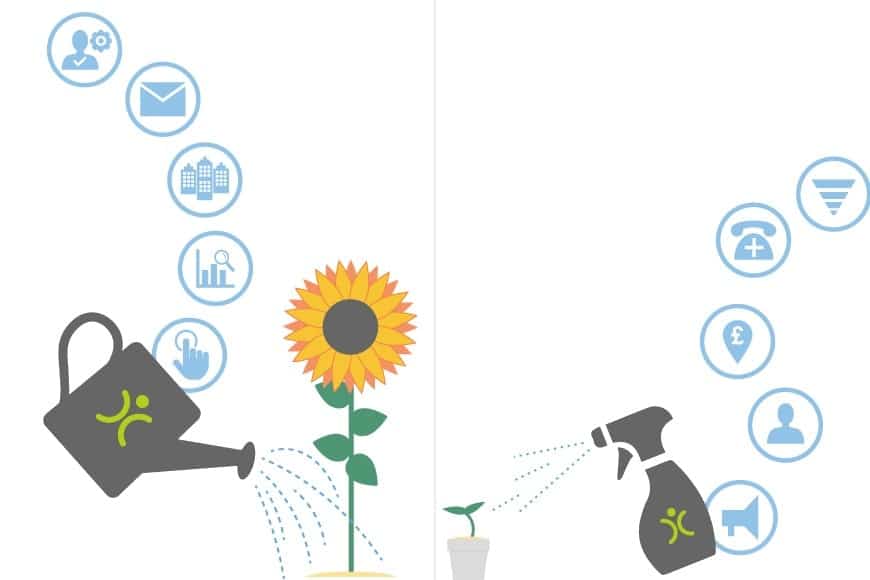
- Customer acquisition and customer retention aren’t mutually exclusive — a CRM should give you the tools to manage both goals at once.
- A well-configured sales pipeline and lead scoring help you focus effort on the deals and prospects most likely to convert.
- Fields like Last Email, Last Call and Preferred Contact Method turn account management into a routine, not a guessing game.
- SLA times based on ticket severity keep urgent customer issues front of the queue, protecting retention when things go wrong.
- A full audit trail of activities and emails means anyone on your team can pick up a relationship with the full history to hand.
Newer businesses focus on gaining customers, but all businesses should ensure they keep their customers happy. Having a CRM system at the heart of your business provides the tools to manage both of these goals. In this blog post, we will dig a little deeper into the wealth of features available to help you with this.
Stepping Out – Your Customer Acquisition Plans
When developing your strategies, remember that effective customer acquisition is key to a sustainable business model. Implementing various customer acquisition tactics can greatly enhance your growth potential.
To state the obvious, when you start a business from scratch, you are unlikely to have many/any customers. Therefore, you need to get working on your customer acquisition strategy! Assuming you have done some market research, you can start to customise your CRM to capture information specific to you. Fine-tuning lists such as Industry sector, job title, or location means you capture data that is relevant and actionable.
Your sales pipeline should reflect your customer acquisition goals. Each stage should be designed with the customer acquisition process in mind to ensure you effectively capture and convert leads. Revenue forecasting is also integral to your customer acquisition strategy; it allows you to predict the financial outcomes of your efforts and adjust as necessary.
Sales Pipeline
Once you have identified potential customers, you need a foolproof way to assess whether you are a good match for each other. That is where your sales pipeline comes in. Having a good pipeline tool gives you so much information at a glance. When an Opportunity was opened, and when you expect it to close, are good starting points. Obviously, the value is paramount, as is the sales stage.
From a managerial perspective, having an overview of your sales team’s workload is important. All these factors mean your sales pipeline is up to date and should prevent those good deals from falling between the cracks. Implementing effective lead scoring can significantly improve your customer acquisition strategy by enabling you to prioritise leads most likely to convert.
Revenue Forecasting
A logical step from working your pipeline is to determine when you will likely see that revenue come in. Maybe you work on long-term projects that require a deposit followed by phased payments. Or you may run a subscription service where revenue will come in at regular intervals. As you would expect, CRM systems such as OpenCRM allow you to track and report on those projected figures.
Referrals
When it comes to buying, customers are more empowered than ever before. Instead of relying on your word that your product is the best there is, they can find a wealth of information about you online. One way you can tap into this is by encouraging referrals — identifying people in your business contacts who are likely to help. In addition to making direct referrals, you can encourage your clients to leave reviews on sites such as Capterra.
By investing in customer relationships post-acquisition, you can further enhance your customer acquisition efforts through loyalty and positive referrals. Account management plays a vital role in both customer retention and customer acquisition, creating a cohesive strategy for growth.
Lead Scoring
The two ways data can be updated in your CRM system are manual or automatic. So many interactions need that human touch, but you can also do some clever things with automation. One great feature allows you to automatically aggregate scores for a Lead record. That score can depend on certain criteria being met — for example, a decision-maker for a company in a sector that is very interesting to you gives them an initial score, and they become a priority in your customer acquisition strategy.
Make Yourself Available
You undoubtedly have a website, social media accounts, a phone number, and an email address. The key is ensuring you have the tools to record a person’s details when they contact you. A really simple option is to put a Contact Us form on your website.
Jotform is a great form-building tool, and its integration with OpenCRM makes it easier than ever to get that data into your CRM system. A second option involves some email integration — as well as copying your inbound and outbound emails into your CRM, your system can also be configured to automatically create new Contact records for emails sent to specific email addresses.
Hopefully, these options give you some food for thought. Essentially, you need to offer whichever of your client’s preferred methods of contact is.

GDPR: your data, your rules
We’ve always put data protection at the heart of OpenCRM, with the tools you need to implement your policies and achieve compliance.
Find out more →Strategy for Customer Retention
In parallel with establishing a customer base, you need to work on customer retention. In fact, many businesses can only survive by making repeat business. Just think of those subscriptions that are incredibly cheap initially, then switch to a regular monthly tariff. In this section, we are going to look at ways in which your CRM can help you take those seeds you have sown to make them truly blossom.
This really is the key. With the initial sale, you have done a lot of hard work “getting to know the customer”. Once you have established that mutual benefit, you can see how both parties can benefit from the relationship. The close of that first piece of business is actually just the start of the journey…
Account Management
One tricky thing to manage is how often you should get in touch with your clients. If you message them too frequently, you risk irritating them, perhaps inviting them to unsubscribe. But a hands-off approach can also be dangerous — there is every chance that offers from your competitors are surfacing here and there, and you are at risk of failing on your customer retention plans.
Within your CRM, you have plenty of date and time stamps that tell you when you last spoke with a client. Fields such as Last Email, Last Call and Preferred Contact Method give you the tools to manage your account as efficiently as possible.
Customer Success
One relatively new role within an organisation is that of a Customer Success Manager. This is not the same as support — their role isn’t to put out fires. Nor is it a sales role — the purpose is not to get people to sign on the dotted line. It sits somewhere in between, with the focus being on keeping customers satisfied, positioning yourself as a partner rather than a supplier. Customer retention is key to ensuring those regular revenue streams don’t dry up, and customer success is at the forefront.
Turn a Frown Upside-Down
When your clients have a problem, they will likely contact your frontline support team. Sometimes it’s just a simple enquiry, or an issue of user error. At other times, it can be more serious and needs investigation right away. To help you manage this, you can configure Service Level Agreement (SLA) times based on ticket severity to ensure that urgent issues receive the appropriate priority. It shows that you listen to and aim to address their pain points.
When Good Things Come to an End
Sadly, business relationships end all the time — a company might cease to trade, get bought out, or restructure. But it could also be that a competitor has launched an amazing new product, or that something went wrong along the way. Broadly, these can be split into reasons you can manage and those outside of your control.
Firstly, if a client has left on amicable grounds, you may still retain them to help with endorsements or referrals. If the parting was something you could have prevented, then you have the knowledge required to improve your service. You might identify trends where there is a lull in the relationship, and so proactively manage this danger area.
Get the Customer Involved
If you log your customer transactions in your CRM, it is fairly easy to identify their areas of interest. One great way to help both yourself and your customer is in new product development — once you have spotted your target audience, you can invite clients to trial beta versions of new features. Here at OpenCRM, we have successfully involved clients in projects such as the integration with Zapier when this was at the trial stage.
Customer Acquisition and Customer Retention: A Common Focus
Whilst most of the points outlined above relate to either customer acquisition or customer retention strategies, many other aspects are relevant to both scenarios.
Keep up your Audit Trail
Given how often I say this one, I think I must sound like a stuck record, but log your interactions! Use the Activities function to record all your meetings, calls and tasks related to your work. Use email integration to capture all your relevant emails into your CRM. These factors offer transparency within your business, so anyone dealing with that client has access to their full history.
Prevent Sales Prevention
I’m sure you’ve all been in a situation where you have abandoned an online shopping cart. Maybe the process was too complicated, or you weren’t fully sure it was working. This applies to both customer acquisition and customer retention scenarios. One feature you might want to consider is allowing your clients to digitally sign a Quote or Sales Order — updating the related order automatically to show the customer has signed it, enabling you to proceed with the next steps.

Do we have what it takes?
We don’t restrict which features you have access to based on how many users you have — you get everything right out of the box.
Find out more →In Summary
Wherever you are with your business, you will always want to keep planting new seeds (customer acquisition) and nurturing the blossoming flowers (customer retention). Make sure your new and repeat business revenue streams are ticking over to support your customer acquisition efforts.

Ready to balance acquisition and retention?
See how OpenCRM gives you the tools to manage both, from one system.
Start your free trial