How to Manage Customer Data for a Small Business: A Practical UK Guide
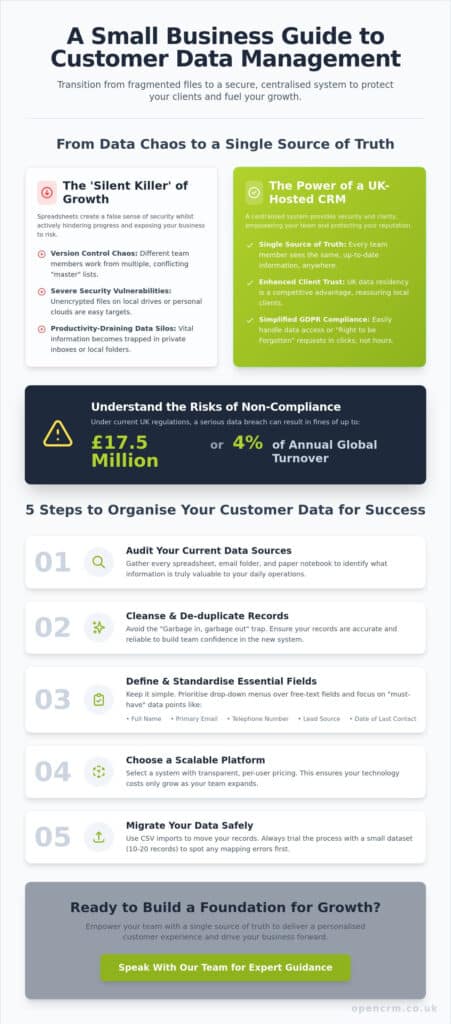
A serious data breach in the UK can lead to fines of up to £17.5 million or 4% of annual turnover. For most businesses, the bigger risk is losing customer trust. If your data is spread across inboxes, spreadsheets, and notes, it’s easy to miss follow-ups, lose track of conversations, and fall short of compliance expectations under the Data (Use and Access) Act 2025.
This guide shows how to move from fragmented records to a secure, organised system. The goal is simple: create a reliable “single source of truth” that protects your data, supports your team, and helps you grow with confidence.
Key Takeaways
- Centralising customer data improves security, visibility, and control
- Start with a clear audit of existing data sources
- Clean and standardise data before importing into a new system
- Track all interactions in one place to improve follow-up and pipeline visibility
- A single source of truth enables better customer experience and reporting
Quick Links
The Foundation of Small Business Customer Data Management
Customer data management is the process of collecting, organising, and securing client information for effective use. In practical terms, it means ensuring your team can access accurate, up-to-date information without relying on memory or scattered files.
Moving to a UK-hosted CRM creates a “single source of truth”, where everyone works from the same dataset. This reduces confusion, improves collaboration, and reassures customers that their information is stored securely within the UK.
Why Spreadsheets Hold You Back
Spreadsheets are useful early on but quickly become limiting. Multiple versions, manual updates, and data held in personal files all lead to inconsistencies and risk. As your business grows, these gaps result in missed opportunities, duplicated effort, and poor visibility.
The Role of GDPR and Data Protection
UK GDPR applies to businesses of all sizes. A structured system makes compliance easier by allowing you to quickly locate, export, or delete customer data when required. Centralising your records also helps maintain clear audit trails and consistent handling of personal information.
5 Steps to Organise Your Customer Data for Success
Improving how you manage customer data doesn’t require complexity. A simple, structured approach delivers the best results:
- Audit your data – Identify where information currently lives (spreadsheets, emails, notes)
- Clean your records – Remove duplicates and outdated contacts
- Define key fields – Keep it simple: name, email, phone, lead source, last contact date
- Choose the right system – Look for a scalable, secure platform with UK data hosting
- Import carefully – Test with a small dataset before completing a full migration
Standardising Your Data Entry
Consistency is critical. Use dropdowns instead of free text where possible to reduce errors and improve reporting. Clear structure at the outset prevents problems later.
Moving Data Safely
Most migrations use CSV imports. Map your existing fields carefully and test with a small sample before importing everything. This minimises errors and gives you confidence in the process.
Turning Managed Data into Business Growth
Once your data is organised, it becomes a valuable business asset. Your team can see the full history of each customer, making follow-ups more consistent and improving pipeline visibility.
With structured data, you can also automate routine tasks such as reminders and follow-ups, freeing your team to focus on meaningful conversations and customer relationships.
Integrating with Your Business Tools
Connecting your CRM with tools like accounting software and email platforms reduces manual entry and keeps information aligned. Integration ensures your data stays accurate across your business systems.
Reporting and Planning
Clean, centralised data helps you spot trends, understand customer behaviour, and make better decisions. Instead of guessing, you can rely on clear, up-to-date insights.
Building a Resilient Future for Your Business
Managing customer data properly is a long-term investment in your business. A structured, centralised approach reduces risk, improves efficiency, and supports consistent growth.
By moving away from fragmented systems and adopting a secure, scalable platform, you create a stable foundation for better customer relationships and smarter decision-making.
Start organising your customer data today and build a more reliable, professional way of working.
Frequently Asked Questions
Is Excel a good long-term solution?
Excel works as a starting point but becomes limiting as your business grows. It lacks the security, collaboration, and tracking needed for reliable data management.
How do I stay GDPR compliant?
Use a system that supports data access, deletion, and audit trails. Keeping everything centralised makes compliance much easier to manage.
Database vs CRM?
A database stores information. A CRM actively helps you manage relationships by tracking interactions, reminders, and customer history.
How often should I clean my data?
At least every six months. Regular reviews keep your data accurate and useful.
Can I manage data on mobile?
Yes. Cloud systems allow access and updates from any device, helping keep records current.
Can I export my data later?
Your data should always be exportable (typically via CSV), ensuring you retain control if you change systems.