
Every CRM has a monthly cost. What’s harder to put a number on is what you get back for it. But if you don’t measure ROI, you can’t tell the difference between a system that’s paying for itself many times over and one that’s quietly becoming an expensive habit.
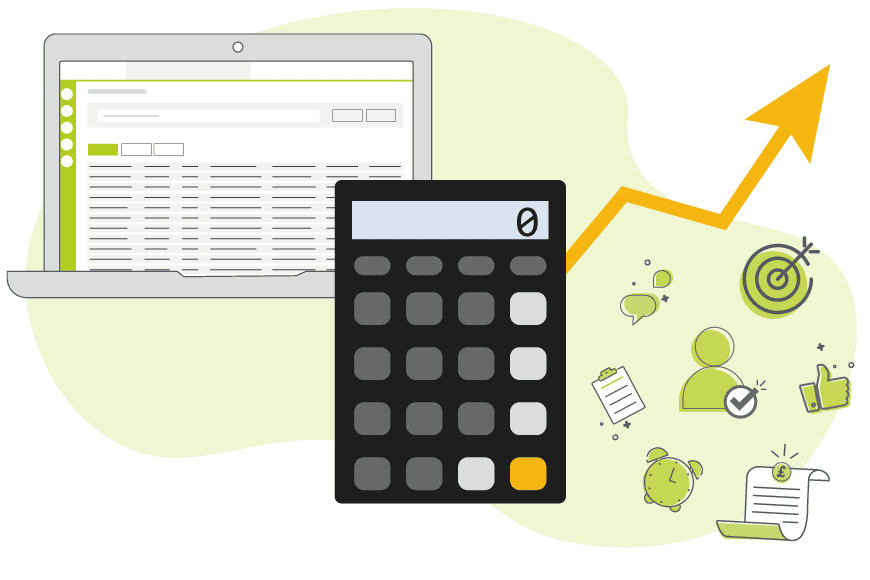
- ROI isn’t just the subscription cost against sales won — it includes time saved on admin, which is often the bigger number.
- Even a small improvement in win rate or retention can outweigh the entire annual cost of the system.
- Visibility — knowing where every deal and ticket stands — has a value even when it’s hard to put an exact figure on it.
- A simple before/after comparison of key metrics is the most honest way to measure your own ROI.
- ROI should be reviewed periodically, not calculated once and forgotten.
Hard Costs vs Hard Returns
The cost side of the equation is easy — it’s the invoice you get every month. The return side is where most businesses stop measuring, because it feels harder to quantify. But it isn’t actually that hard, if you’re willing to look at a few key numbers before and after adoption.
If you can’t measure it, you can’t tell whether it’s working — or whether you’re just used to paying for it.
Time Saved
This is often the single biggest return, and the easiest one to underestimate. Every task that used to require searching an inbox, updating a spreadsheet, or manually chasing someone for an update now happens in seconds inside the CRM. Multiply that across a team, across a year, and the hours add up to a real cost saving — even before a single extra sale is considered.

Do we have what it takes?
We don’t restrict which features you have access to in OpenCRM based on how many users you have. You get everything right out of the box.
Find out more →Win Rate & Retention
A CRM’s biggest financial impact usually shows up in two places: how many opportunities you win, and how many customers you keep. Consistent follow-up — the kind a CRM makes automatic rather than optional — reliably improves both. Even a small percentage improvement in either number, applied across a year’s worth of business, can dwarf the entire annual cost of the system.
The Value of Visibility
Some returns don’t show up neatly on a spreadsheet but are real all the same. Knowing exactly where every deal, project and support ticket stands — instead of guessing or chasing an update — removes a layer of background stress that’s hard to price but easy to feel the absence of once it’s gone.
Let us take you on a tour
Why not chat with one of our team as they take you on a tour of the system?
Find out more →Calculating Your Own ROI
The simplest approach is a before-and-after comparison against a small set of numbers that matter to your business: average deal close time, win rate, customer retention rate, and hours spent on admin per week. Track those over a few months of CRM use and compare them to your baseline before adoption.
ROI isn’t a one-off calculation to file away. Revisit it periodically — as your team grows and your processes mature, the return on a well-used CRM tends to grow with it.

Want to see the numbers for your own business?
See how OpenCRM can pay for itself many times over.
Start your free trial