CRM for UK Charity Sector

Graham Anderson

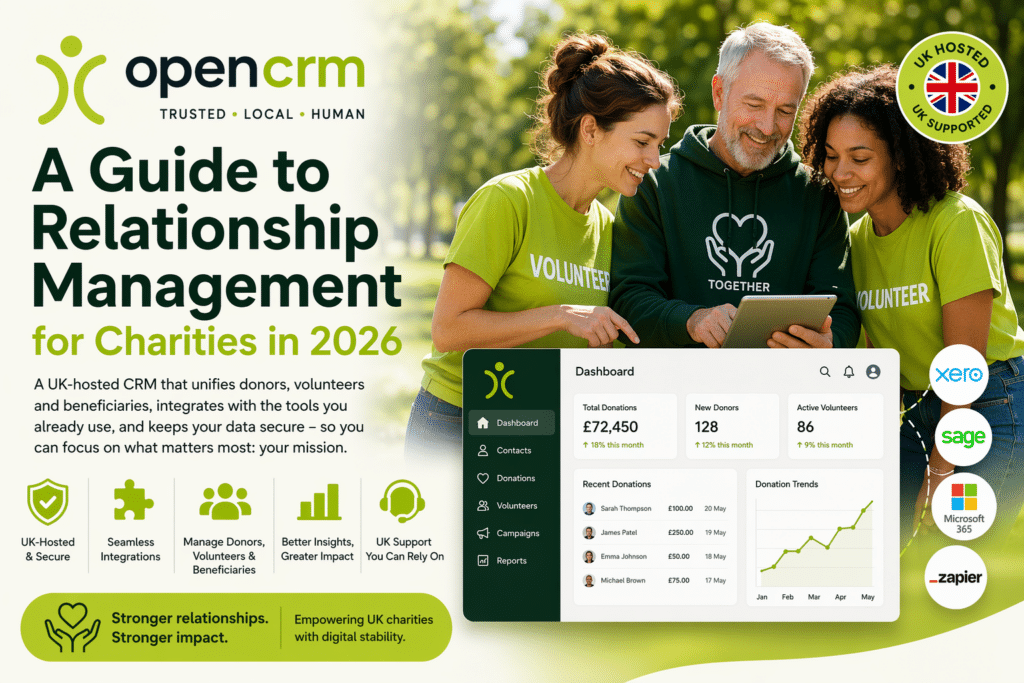
A Guide to Relationship Management for Charities in 2026

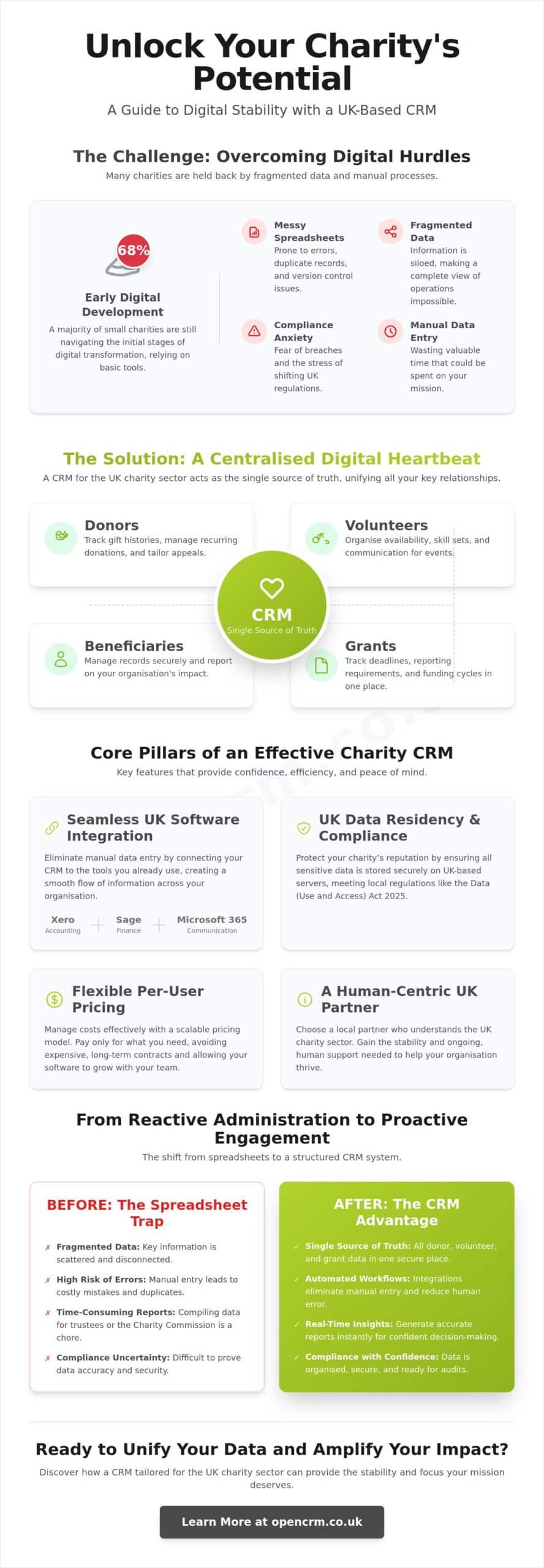
What if the greatest threat to your mission isn’t a lack of funding, but the invisible wall created by fragmented data? With 68% of small charities still in the early stages of digital development, many organisations find themselves trapped between messy spreadsheets and the anxiety of shifting regulations. Finding the right CRM for UK charity sector operations shouldn’t feel like a leap into the unknown or a commitment to a faceless global corporation. You’ve likely felt the frustration of wanting to focus on your community, only to be held back by manual data entry or the fear of a compliance breach.

Lets be honest, you do what you do because of the people connection, is it wrong to expect the same from your CRM provider?

We’re here to help you regain that focus by providing a clear path to digital stability. This guide will show you how a UK-hosted CRM can serve as your single source of truth, helping you manage donors and volunteers with confidence and ease. You’ll learn how to achieve integration with UK accounting software like Xero and other leading platforms, whilst ensuring your data remains securely within British borders. We’ll explore the 2026 compliance landscape, including the impact of the Data (Use and Access) Act 2025, and explain how a local, reliable partner can offer the peace of mind your team deserves.
Key Takeaways

  • Learn how a centralised database acts as the engine for your fundraising efforts by unifying donor, volunteer, and beneficiary records in one secure place.
  • Discover the benefits of connecting your CRM for UK charity sector activities with essential tools like Xero, Sage, and Microsoft 365 to eliminate manual data entry.
  • Understand why storing sensitive data on UK-based servers is vital for maintaining your organisation’s reputation and ensuring compliance with local regulations.
  • Explore how per-user pricing models offer a flexible and scalable way to manage software costs without the burden of expensive, long-term contracts.
  • Find out why choosing a local, human-centric partner provides the stability and ongoing support needed to help your charity thrive in 2026.

What is a CRM for the UK Charity Sector?

At its core, Customer Relationship Management (CRM) is about much more than just storing phone numbers and email addresses. For a non-profit, a CRM for UK charity sector operations acts as a digital heartbeat, connecting every donor, volunteer, and beneficiary to your central mission. Whilst a generic system might focus on sales pipelines and profit margins, a charity-specific configuration organises the unique complexities of Gift Aid, recurring donations, and grant cycles. It shifts your organisation from a state of reactive administration to one of proactive engagement, ensuring your focus remains on your cause rather than your paperwork.

Think of a centralised database as the engine room of your organisation. Without it, your data sits in isolated silos, making it almost impossible to see the full picture of your impact. With a dedicated CRM, you can track a donor’s journey from their first £10 contribution to a lifetime of support. This visibility ensures that no relationship is neglected and every fundraising campaign is backed by accurate, real-time data. It provides the stability you need to grow your reach without increasing your workload.

The Shift from Spreadsheets to Structured Systems

Many small teams start their journey with Excel or Google Sheets. It’s a natural progression, but common signs of outgrowing these tools include duplicate records, version control issues, and the sheer time required to compile a report. Structured systems provide a single source of truth that’s essential for transparency. When it’s time to report to the Charity Commission, having your data organised in a CRM ensures your figures are accurate, and your compliance is beyond reproach. It replaces the anxiety of “is this the right version?” with the confidence of verified data.

Key Relationships Managed Within a Charity CRM

Managing a charity involves balancing several distinct groups, each with their own needs. A robust CRM allows you to track donor gift histories to tailor your appeals, whilst simultaneously organising volunteer availability and skill sets so you can call on the right person at the right time. It also serves as a hub for grant applications. By tracking deadlines and reporting requirements in one place, you’ll never miss a critical window for funding. This cohesive approach ensures that whether you’re talking to a major donor or a weekend volunteer, you have the full context of their relationship with your charity right at your fingertips.

Streamlining Operations with Integrated UK Software

Efficiency in the charity sector isn’t just about working harder; it’s about making your tools work together. Many niche platforms designed for non-profits often lack the robust business integrations needed to handle professional-grade operations. A versatile CRM for UK charity sector organisations bridges this gap by acting as a central hub for all your existing software. By connecting your donor data with your accounting and communication tools, you eliminate the tedious manual entry that often drains the energy of small teams. This connectivity ensures that your data flows smoothly between departments, providing a clear picture of your charity’s health.

Accounting for Success: Xero and Sage

For most UK charities, financial transparency is a top priority. Syncing your donation records directly with your accounts in Xero or Sage simplifies the often-daunting task of Gift Aid claims. Instead of cross-referencing spreadsheets, your finance team can see exactly where funds are coming from in real-time. This reduction in manual data entry between fundraising and finance departments lowers the risk of human error. Ultimately, real-time financial visibility allows your trustees to make informed, confident decisions based on the most current data available.

Seamless Communication with Microsoft 365

Communication is the lifeblood of donor retention. Integrating your CRM with Microsoft 365 ensures that every email sent to a supporter is tracked within their contact record, so no request or thank-you note ever falls through the cracks. You can organise shared calendars for volunteer events or fundraising galas, ensuring everyone is on the same page. Managing project documents directly alongside contact records means your team spends less time searching for files and more time delivering impact. This alignment helps your organisation stay compliant with the Code of Fundraising Practice, which sets high standards for how supporter data should be handled and respected.
Beyond these core integrations, tools like Zapier play a vital role in connecting niche charity apps to your central hub. Whether you’re using a specific event platform or a niche mailing tool, automation reduces the admin burden on part-time staff and volunteers. It allows them to focus on the human side of charity work rather than the data side. If you’re looking for a system that brings all these elements together without the complexity of a global corporate platform, you might find that OpenCRM’s approach to integration provides the balance of power and simplicity your team needs. This cohesive ecosystem ensures your charity remains agile and responsive, no matter how much you grow.

charity CRM UK

UK Data Residency: Protecting Your Charity’s Reputation

“Where is my data?” has become the most vital question for any trustee or charity manager to ask. When you select a CRM for UK charity sector operations, you aren’t just choosing a software interface; you’re choosing a jurisdiction for your most sensitive information. Storing donor records on US-based servers can expose your organisation to complex international data transfer laws that are often difficult to navigate. By keeping your data within British borders, you ensure that your charity remains firmly under the protection of the UK GDPR and the Data Protection Act 2018. This local residency offers a level of reputational security that global corporate platforms often struggle to provide.

Knowing your data is housed in UK data centres provides a profound sense of peace of mind. It simplifies your compliance journey and ensures that you aren’t caught out by shifting international regulations. For a charity, trust is your most valuable currency. Protecting that trust starts with knowing exactly where your supporters’ details are kept. It’s about building a foundation of stability that allows your team to focus on their mission without worrying about legal grey areas.

GDPR Compliance for Non-Profits

Compliance doesn’t have to be a source of constant anxiety for your team. A structured CRM helps you manage “Right to be Forgotten” requests and Subject Access Requests with ease, replacing the messy trail of old emails and spreadsheets. With the 19 June 2026 deadline for all UK charities to have a formal data protection complaints process in place, having a system that logs every interaction is essential. Built-in security features, such as role-based access, offer far superior protection compared to a simple password-protected document. It also automates consent tracking for your marketing, ensuring you stay aligned with the latest requirements of the Data (Use and Access) Act 2025.

The Advantage of UK-Based Support

Technology works best when it’s backed by people who understand your world. Relying on a support team based in a US time zone often leads to frustrating delays when you need urgent help. Choosing a local partner means you can speak to someone who understands the UK business culture and the specific pressures of the charity sector. This accessibility is particularly valuable for non-technical staff or volunteers who may need a bit of extra guidance. It transforms the software from a distant tool into a reliable partnership, giving your team the confidence to use the system to its full potential.

Evaluating Costs: Why Per-User Pricing Works for Charities

Financial sustainability is a constant concern for UK non-profits, especially when balancing the need for professional tools against tight operational budgets. Choosing a CRM for UK charity sector operations involves more than just looking at a list of features; it requires a deep dive into the total cost of ownership. Whilst some vendors push flat annual fees for unlimited users, this can often lead to smaller teams subsidising the infrastructure of much larger organisations. A per-user model ensures that your software costs align perfectly with your actual usage, allowing you to pay only for the seats your team needs today.

This “pay for what you use” approach is particularly beneficial for organisations with fluctuating budgets or those that rely on seasonal volunteer support. Without the weight of long-term, restrictive contracts, you have the flexibility to adjust your subscription as your team changes. It provides a level of stability that “free” software rarely offers. Whilst the initial price tag of open-source or “free” tools might look attractive, the hidden costs of setup, customisation, and a lack of professional support can quickly erode any perceived savings. Investing in a subscription ensures you have a reliable partner who is committed to keeping the system running smoothly.

Budgeting for Growth Without the Risk

Calculating the true cost of a CRM means looking beyond the monthly invoice to understand how it impacts your daily operations. Monthly subscriptions improve cash flow management, which is vital for charities that rely on grant cycles or irregular fundraising peaks. It also helps you avoid the “shelfware” trap, where you’re paying for complex features that your team simply doesn’t use. By starting with exactly what you need and adding users as your organisation grows, you ensure every pound spent delivers direct value to your mission. This methodical approach to scaling reduces the financial risk of digital transformation.

The Hidden Value of Expert Support

The success of your digital transition depends on how well your team can use the new system. Factoring in the cost of onboarding and training is essential for a smooth rollout, as even the best software is ineffective if your staff don’t feel confident using it. High-quality support from a local partner reduces the long-term cost of ownership by preventing small technical issues from becoming major roadblocks. A per-user pricing model ensures the vendor is incentivised to help you succeed, as their growth is directly tied to your continued satisfaction and usage. This alignment of interests creates a partnership based on results rather than just a one-off transaction.

If you’re ready to see how a flexible, transparent pricing model can work for your team, you can explore OpenCRM subscription plan to find the fit for your organisation. Choosing a partner that values clarity and fairness allows you to focus your resources where they matter most: on your beneficiaries and your community.

Choosing OpenCRM as Your Trusted Charity Partner

OpenCRM is a “Trusted Ally” for organisations seeking a powerful yet approachable CRM for UK charity sector operations. Whilst many niche non-profit tools lack the structural depth of business-grade software, our platform was originally built for the robust requirements of small and medium-sized businesses. This heritage means you benefit from a system that is stable, scalable, and fully capable of handling complex relationship management without the fragility often found in smaller, sector-specific apps. We provide the technical strength you need to manage your mission with absolute confidence.

Choosing a partner is about more than just features; it’s about the security of your infrastructure. We host all our data within UK centres, ensuring your organisation meets its residency obligations whilst avoiding the complexities of international data laws. Our local, expert support team is based right here in the UK, speaking your language and understanding the unique cultural context of the British charity landscape. This proximity builds a sense of security, knowing that help is available when you need it from people who genuinely care about your success. It replaces the distant, corporate feel of global providers with a personable, reliable service.

A Human-Centric Approach to Technology

We believe that technology should serve people, not the other way around. This is why we avoid high-pressure sales tactics, preferring instead to build supportive, long-term partnerships with our clients. Our platform is designed to be flexible, growing alongside your organisation as your needs evolve. We remain committed to transparency and straightforward pricing, offering a per-user subscription model that eliminates hidden costs and ensures you always know exactly what you’re paying for. This integrity is at the heart of everything we do, positioning us as a reliable guide in your digital journey.

Next Steps for Your Organisation

Moving away from fragmented spreadsheets doesn’t have to be daunting. Our team is experienced in helping organisations migrate their data to a structured system, ensuring a smooth transition while preserving your vital donor history. Seeing the system in action is often the best way to understand how it can be adapted to your specific workflows, from volunteer management to Gift Aid tracking. You can take the first step towards a more organised future by seeing how our platform handles your unique challenges. Why not book a live demo with the OpenCRM team today to explore how we can support your charity’s growth and help you regain your peace of mind.

Strengthening Your Mission with Digital Stability

Moving from fragmented spreadsheets to a structured system is about more than just organising data; it’s about reclaiming time for your cause. We’ve explored how a CRM for UK charity sector organisations provides a single source of truth whilst ensuring your donor records remain securely within British borders. By integrating your database with essential tools like Xero, Sage, and Microsoft 365, you can eliminate the manual admin burden that often holds small teams back. This shift allows your staff and volunteers to focus their energy where it’s needed most.

You need a partner that understands the specific pressures of the UK non-profit landscape. With our UK-hosted data centres and a friendly, local support team, you can manage your relationships with absolute peace of mind. Our transparent pricing ensures you only pay for what you need as you grow. Discover how OpenCRM empowers UK charities – Book your demo now and see how we can help you build a more secure, efficient future for your organisation. Your mission is too important to be stalled by outdated systems.

Frequently Asked Questions

Does a charity CRM help with Gift Aid claims?

Yes, a dedicated system simplifies Gift Aid by tracking valid declarations and generating the reports required for HMRC submissions. It ensures you have a clear digital audit trail for every eligible donation, reducing the risk of missing out on vital tax relief due to administrative errors.

Is my donor data safe if it is hosted in the UK?

Storing your data in UK-hosted centres provides a high level of security and ensures your organisation remains compliant with the UK GDPR and the Data Protection Act 2018. This residency protects your charity from the legal uncertainties of international data transfers, keeping your supporters’ sensitive information firmly under British jurisdiction.

Can we manage both volunteers and donors in the same system?

You can manage donors, volunteers, and beneficiaries within a single system to create a unified view of your organisation’s community. This centralisation allows you to see if a donor also gives their time as a volunteer, helping you tailor your communications and show genuine appreciation for their full contribution to your cause.

How long does it take to implement a new CRM for a small charity?

Most small charities can expect a standard implementation to take between three and six weeks, depending on the complexity of your existing data. This timeline includes cleaning your spreadsheets, configuring the software to match your specific workflows, and ensuring your team feels comfortable with the new interface before you go live.

Do we need a long-term contract to use OpenCRM?

No long-term contracts are required, as our per-user subscription model is designed to offer maximum flexibility for non-profits. This approach allows your charity to scale the number of seats up or down based on your current staffing levels, providing better control over your monthly budget without being tied into an expensive commitment.

Can OpenCRM integrate with our existing accounting software like Xero?

OpenCRM integrates seamlessly with popular UK accounting software such as Xero and Sage. This connection allows you to automatically sync donation records and invoices, reducing the need for manual data entry and ensuring your finance team always has access to accurate, real-time financial figures.

What kind of training is available for our non-technical staff?

We provide comprehensive onboarding and training sessions specifically designed for users who may not be tech-savvy. Our goal is to ensure every member of your team feels confident navigating the system, whilst our UK-based support team is always on hand to answer any questions as you settle into your new CRM for UK charity sector operations.

Photo of author

Graham Anderson

I started out as a professional drummer (notice I didn’t say musician) before joining Apple’s UK Mac launch team and discovering a passion for technology. That moment stuck — and I’ve now spent over 40 years in software development and the wider tech industry. As founder of OpenCRM, I now split my time between being Managing Director and holding the arguably more enjoyable title of System Architect.