
Every business deals with an angry customer eventually. How that moment is handled — not whether it happens at all — is usually what determines whether the relationship survives it.
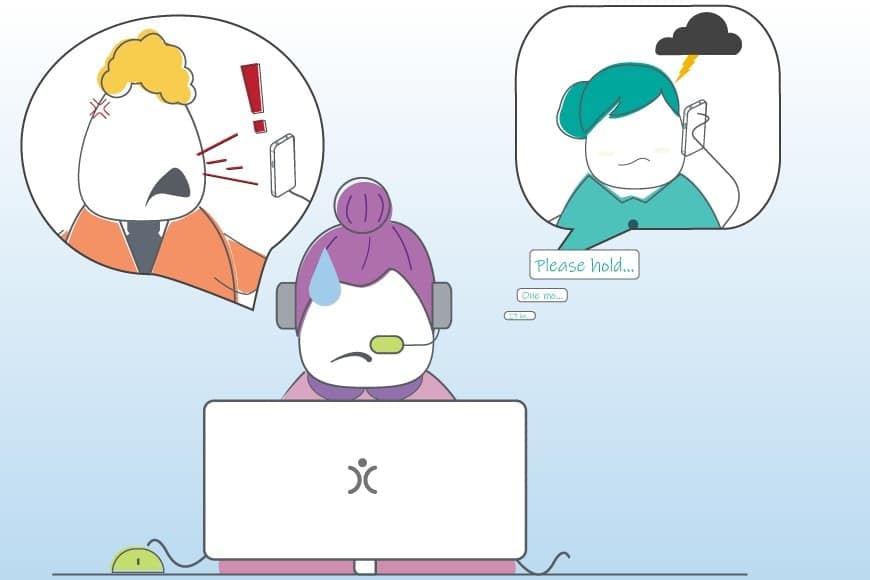
- Most anger comes from feeling unheard or let down, not from the original issue itself.
- Listening first, without defending, de-escalates far more effectively than jumping to a fix.
- Having a customer’s full history to hand avoids making things worse with an uninformed response.
- A calm, consistent process protects both the customer relationship and the team handling it.
- Logging the outcome ensures the same issue is caught and prevented next time.
Why Customers Get Angry
It’s rarely just about the issue itself. A late delivery or a billing error is the trigger, but the anger usually comes from feeling unheard, dismissed, or like the business doesn’t care. Understanding that distinction changes how you respond.
How to Respond
Listen First, Don’t Defend
The instinct to explain or justify immediately often makes things worse. Letting the customer finish, and acknowledging their frustration, does more to de-escalate than any explanation.
Stay Calm and Consistent
Matching frustration with frustration rarely ends well. A calm, steady tone — even under pressure — signals that the situation is being taken seriously and is in safe hands.
Own the Resolution
Passing a customer between departments compounds the frustration. Wherever possible, own the issue through to resolution, or at least the next clear step.
An angry customer who feels properly heard often becomes more loyal than one who never had a problem at all.

Do we have what it takes?
We don’t restrict which features you have access to in OpenCRM based on how many users you have. You get everything right out of the box.
Find out more →Where a CRM Helps
Nothing frustrates an already-angry customer more than having to repeat themselves. With every previous interaction logged in one place, whoever picks up the conversation can respond with full context immediately, rather than fumbling for background while the customer waits.

Let us take you on a tour
Why not chat with one of our team as they take you on a tour of the system?
Find out more →After the Conversation
Once resolved, logging what happened — and why — means the same issue is far less likely to catch the business off guard a second time. The goal isn’t just to survive one difficult conversation, but to learn from it.

Ready to handle every conversation with context?
See how OpenCRM keeps your team informed, every time.
Start your free trial